Key events1946 to now
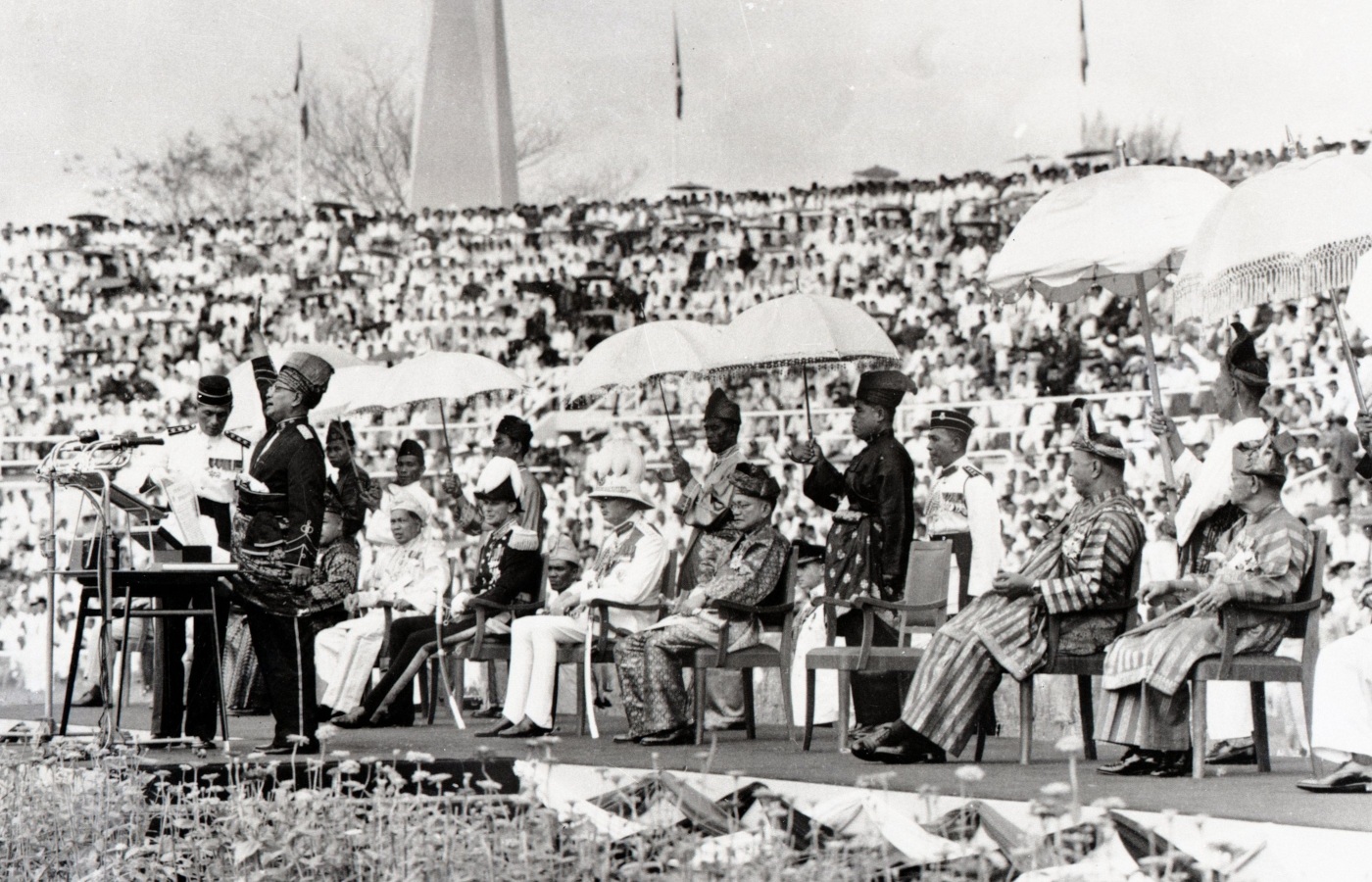
Before Merdeka
to 1957
Between 1946 and 1948 Britain set up a unitary Malayan Union with a broad common citizenship, met organised Malay opposition, and replaced it two years later with the Federation of Malaya. Its federal structure was carried into independent Malaya, while its citizenship rules were changed in the 1950s and again at independence.
The twelve-year armed conflict in Malaya between British and Commonwealth forces and the armed wing of the Communist Party of Malaya left marks on Malaysian citizenship, security law and the road to independence.
First nationwide federal election before Merdeka; Alliance won 51 of 52 seats.
The commission that drafted the constitution for an independent Malaya, the bargains written into its report, and where the constitution actually adopted in 1957 differed from it.
The Alliance years
1957 to 1969
First post-independence general election; Alliance government under Tunku Abdul Rahman.
Malaysia was created on 16 September 1963 when the Federation of Malaya joined with Singapore, North Borneo (Sabah) and Sarawak under the Malaysia Agreement 1963, and the terms of that founding bargain are still argued over in Parliament today.
On 9 August 1965 Singapore ceased to be a state of Malaysia, less than two years after joining.
In 1966 Sarawak's first Chief Minister was removed by the state Governor, put back by a court, and then removed again after the federal government declared an emergency and used it to change the state constitution. Andrew Harding describes the episode as a precedent for later federal interference in Sabah and Sarawak.
The completed 144-seat result table records Perikatan with 90 seats—below the 96 needed for a two-thirds majority; the election was followed by the 13 May violence and an emergency suspension of parliamentary rule.
May 13 and the BN era
1969 to 1990
Between May 1969 and February 1971 Malaysia was governed under a Proclamation of Emergency rather than through a sitting Parliament. Under the Emergency (Essential Powers) Ordinance No. 2 of 1969 the executive authority of the Federation was delegated to a Director of Operations, who was required to act on the Prime Minister's advice and was to be assisted by a body called the National Operations Council.
How AUKU shaped university students’ ability to take part in politics, and how those restrictions were later eased.
What the Constitution (Amendment) Act 1971 changed, how it was passed, and how it connects to the Sedition Act 1948.
How the New Economic Policy was launched in 1971, what its planning documents said it was for, what the official numbers show, and which parts of its record remain disputed.
The 1974 law that placed ownership of all Malaysian petroleum in a single federal company, PETRONAS. The Act itself names no percentage; the 5% cash payment that Sabah and Sarawak politicians have argued over ever since comes from the separate state agreements signed under it in 1975 and 1976.
On 6 June 1976 a light aircraft crashed on approach to Kota Kinabalu, killing Sabah's chief minister and four other members of the new state government.
Hussein Onn led Barisan Nasional (BN) at the first general election held after he succeeded Abdul Razak as Prime Minister in 1976.
The 1981 Abdul Hadi Awang speech commonly called “Amanat Hadi” remains disputed in meaning and became part of UMNO–PAS political debate.
Mahathir's first general election as PM; BN won a large parliamentary majority.
The 1983–84 dispute between Mahathir Mohamad’s federal government and the Rulers over how Bills become law and who may declare an emergency.
Bumiputra Malaysia Finance, the Hong Kong finance subsidiary of the state-linked Bank Bumiputra Malaysia Berhad, made large, mostly unsecured Hong Kong property loans. The borrowers' 1983 collapse turned those loans into losses, and a bank officer sent to examine them was murdered.
Ops Lalang was a police operation beginning on 27 October 1987 in which more than a hundred people were detained without trial under the Internal Security Act 1960 and the publishing permits of four newspapers were withdrawn.
The 1988 conflict over Malaysia’s top court, the removal of its head, and why it still shapes debates about judicial independence.
In 1987 the country's largest party split into two factions over its presidency, and within ten months a court ruling on unregistered branches ended the original UMNO's legal existence and produced two new parties in its place.
Two fronts and Reformasi
1990 to 2008
On 28 February 1991 Prime Minister Mahathir Mohamad presented a paper called "Malaysia: The Way Forward" that set the goal of Malaysia becoming "a fully developed country by the year 2020".
In the early 1990s Malaysia's central bank lost billions of ringgit trading foreign currencies, and a Royal Commission of Inquiry set up 23 years later produced a much larger loss figure than the one disclosed at the time — a gap that is still argued over.
Malaysia’s 1993 confrontation over royal legal immunity, and the constitutional rules that followed.
Polling was held on 24 and 25 April 1995. BN won 162 of 192 seats and 65.15 per cent of the popular vote, its highest vote share of any general election held while Mahathir Mohamad was Prime Minister.
How the regional financial crisis reached Malaysia, how the government responded with capital controls, and why the period became a political turning point.
How Anwar Ibrahim’s removal from government in 1998 turned calls for reform into a national opposition movement.
The criminal cases involving Anwar Ibrahim, their court outcomes, and their effects on federal politics.
Post-Reformasi election in which Barisan Alternatif contested and PAS increased its parliamentary representation.
The Lina Joy litigation was decided by Malaysia's Federal Court on 30 May 2007.
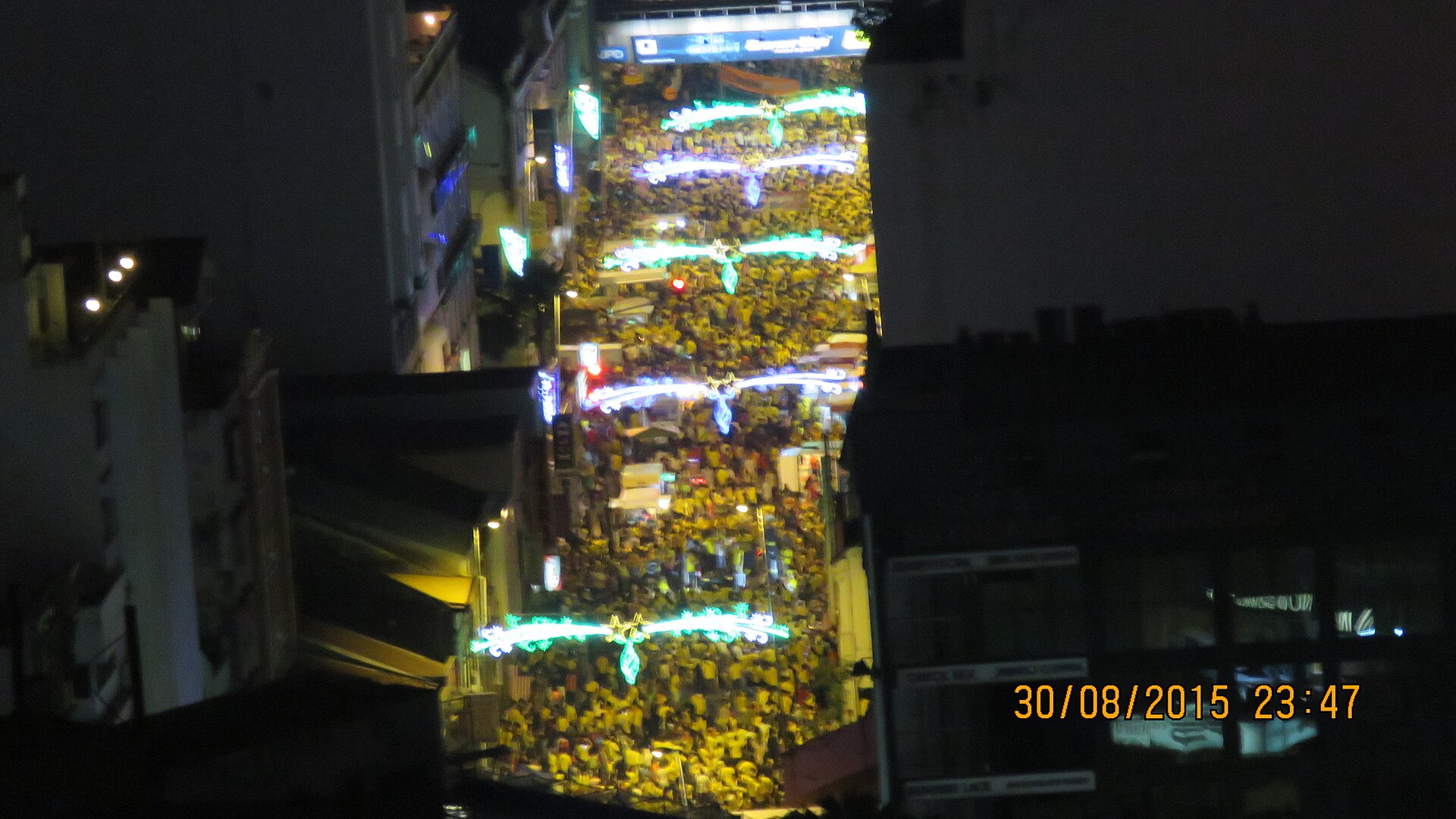
The five Bersih public rallies from 2007 to 2016 called for electoral reform and accountability and had immediate political effects.
On 25 November 2007 the Hindu Rights Action Force (HINDRAF) held a street gathering in central Kuala Lumpur over grievances of the Malaysian Indian community.
The two-coalition decade
2008 to 2018
The 'political tsunami': BN lost two-thirds majority and five states; birth of Pakatan Rakyat.
On 8 March 2008 Malaysia's ruling Barisan Nasional coalition kept federal power but lost its two-thirds parliamentary majority and four state governments; opposition parties consequently governed five states.
The 26 August 2008 by-election in the Penang parliamentary seat of Permatang Pauh returned Anwar Ibrahim to the Dewan Rakyat five months after the 2008 general election.
In February 2009 three state assembly members withdrew their support from Perak's Pakatan Rakyat government, and the resulting fight over who was lawfully Menteri Besar ran through three courts. Constitutional scholar Shad Saleem Faruqi describes what came out of it as a "Nizar precedent" that adds considerably to royal discretion in appointing state chief ministers, and later in appointing the Prime Minister.
Between 2013 and 2015 the opposition coalition Pakatan Rakyat was pulled in two directions at once: a criminal appeal that ended with its parliamentary leader in prison, and an internal manoeuvre in Selangor that ended with a change of Menteri Besar and a public split.
Malaysia's Goods and Services Tax took effect on 1 April 2015, ran for just over three years, and was removed by the government elected in May 2018.
This page covers what happened to the opposition coalition Pakatan Rakyat in 2015, after a Kelantan state law on hudud penalties and PAS's annual congress vote to sever ties with DAP, and what followed. The three member parties did not agree at the time on whether the coalition had ended, or on why the break happened; both disagreements are set out below.
The 1MDB scandal produced court cases and international investigations and played a role in Malaysia’s change of government in 2018.
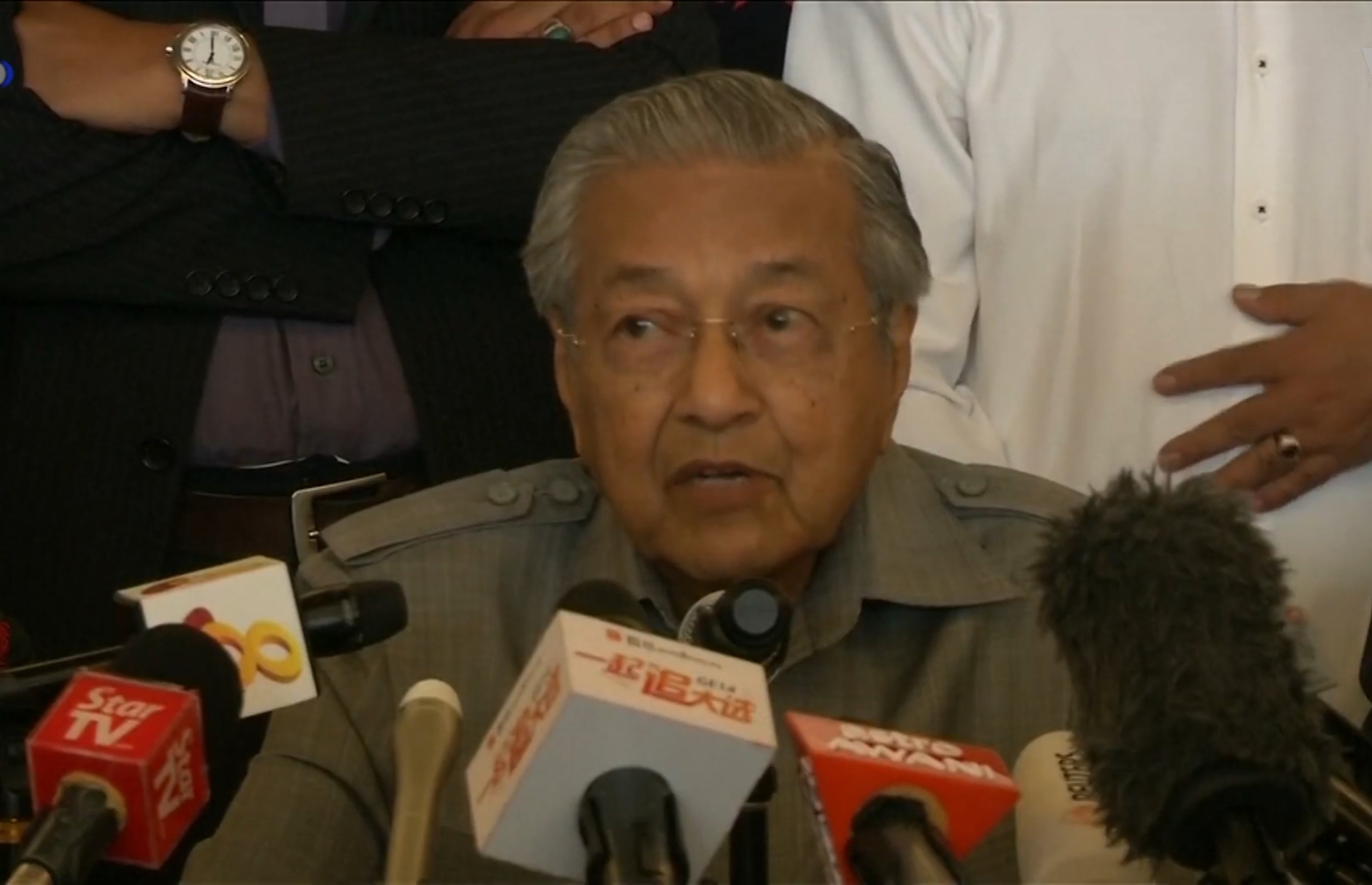
In 2016 a former prime minister left the party he had once led, signed a joint statement with his old opponents calling for the sitting prime minister's removal, and set up a new party that would eventually join the opposition coalition that won the 2018 general election.
On 9 May 2018 Malaysians voted in the 14th general election and, for the first time since independence in 1957, the governing side lost its parliamentary majority and handed over power. That side had held the federal government continuously since 1957 — first as the Alliance, and later as its broader successor coalition, Barisan Nasional.
Change and fragmentation
2018 to now
In late 2018 the Pakatan Harapan government dropped its stated plan to accede to a United Nations treaty on racial discrimination, and two weeks later a mass gathering in Kuala Lumpur that had been called to oppose that plan went ahead anyway.
In July 2019 Malaysia's Parliament amended the Federal Constitution to lower the voting age from 21 to 18 and to introduce automatic voter registration, but the change only took legal effect in December 2021 after a court challenge in Sarawak.
A rapid realignment that ended the PH government and reshaped federal coalitions; Muhyiddin sworn in.
Sabah's snap state election of 26 September 2020 followed a dispute over majority support in the Warisan-led state government and the subsequent dissolution of the assembly. It produced a new federal-aligned coalition called Gabungan Rakyat Sabah and was held in the middle of the COVID-19 pandemic.
From 12 January to 1 August 2021 Malaysia was governed under a nationwide Proclamation of Emergency. Elections were not held and laws were made by ordinance instead of by Act; the Dewan Rakyat nevertheless sat from 26 to 29 July 2021.
In August 2021 Malaysia changed prime minister for the second time in eighteen months without a general election.
In September 2021 a sitting Malaysian government and the opposition coalition signed a written agreement trading parliamentary support for a list of political reforms.
In December 2021 Parliament rewrote the clause of the Federal Constitution that lists the states of the Federation, splitting them again into "the States of Malaya" and "the Borneo States" of Sabah and Sarawak, and what that change actually delivers is still argued over.
Sarawak's 12th state election was delayed by more than a year by a COVID-19 emergency proclamation, and when it finally ran on 18 December 2021 the governing Gabungan Parti Sarawak coalition won 76 of the 82 seats.
The Johor state election of 12 March 2022 was the first Malaysian election fought on an electorate expanded by Undi18 and automatic voter registration.
Malaysia’s 2022 anti-hop law added constitutional rules on when a federal MP’s seat becomes vacant after changing party membership.
Five days of deadlock; the Agong's role; PH-BN-GPS-GRS government.
This page covers the sharp increase in seats won by PAS and its Perikatan Nasional partners at the November 2022 general election, the label commentators attached to it, and the competing explanations analysts have offered for why it happened.
Malaysia Madani is the name the Anwar Ibrahim government gave to its own governing framework after taking office in November 2022.
On 12 August 2023, six Malaysian states voted on the same day after GE15, and each side kept the states it already held.
At the turn of 2024, a Malaysian government communications officer publicly alleged that opposition and some government figures had met in Dubai to plan the fall of Anwar Ibrahim's unity government; several people subsequently named in circulating material denied involvement, and police opened investigations. No court finding on the alleged plot has been identified.
How Najib Razak became the first Malaysian prime minister to be jailed, what the Pardons Board changed in February 2024, and how the 1MDB case and the disputed "house arrest addendum" have proceeded since.
Sabah voted on 29 November 2025 and returned no single coalition with a majority, leaving Chief Minister Hajiji Noor to assemble a government from several parties and independents in the hours after the count.
The 2026 changes in Perikatan Nasional leadership and the PAS–Bersatu relationship, and what they mean for the next general election.
Era backdrops: Kerajaan Tanah Melayu (Public domain); CEphoto, Uwe Aranas (CC BY-SA 3.0); Wee Hong (CC BY-SA 4.0); DoD photo by Helene C. Stikkel (Public domain); Apa masalah (CC BY-SA 4.0); Voice of America (Public domain) · via Wikimedia Commons